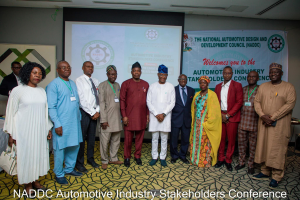
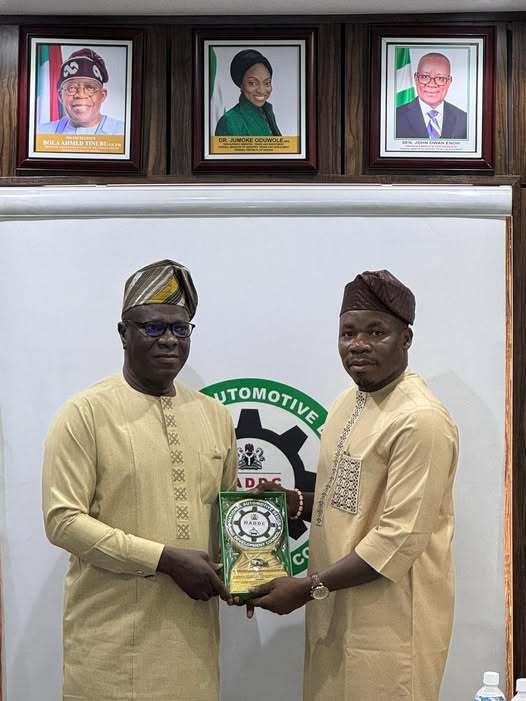
In a strategic move to foster the growth of the Automotive sector, the National Automotive Design and Development Council, Director-General, Oluwemimo Joseph Osanipin and the Chief Executive Officer of the Nigerian Electricity Management Services Agency, Engr. Olusegun Adesayo, on the 23rd of April 2026 reaffirmed their commitment to a strategic partnership focused on accelerating electric mobility adoption and strengthening safety standards across Nigeria.
The meeting underscored the importance of collaboration between both regulatory institutions in driving the development of a resilient, safe and future-ready electric vehicle (EV) ecosystem. Key discussions centered on the establishment and enforcement of national standards to support the seamless integration of electric vehicles into Nigeria’s transport and energy landscape.
In his remarks, Engr. Olusegun Adesayo emphasized that strong institutional partnerships are critical to ensuring compliance with electrical safety standards, mitigating operational risks and preventing technical failures associated with poorly implemented EV infrastructure.
Osanipin congratulated the Engr. Adesayo on his appointment and expressed confidence in his capacity to drive impactful reforms within the electricity management sector. He reiterated NADDC’s commitment to working closely with NEMSA to ensure that Nigeria’s automotive industry remains aligned with global trends in sustainable and electric mobility.
Both parties highlighted the pivotal role of regulatory expertise in guiding the deployment of EV technologies, particularly in areas such as charging infrastructure, installation standards, and maintenance protocols. Emphasis was placed on adherence to approved electrical standards, proper cabling systems, and safe shutdown procedures during maintenance as essential safeguards against system failure and user risk.
This strengthened collaboration reflects a shared commitment to positioning Nigeria as a leading force in electric mobility across Africa, while ensuring that safety, quality, and regulatory compliance remain central to the country’s transition to cleaner transportation solutions.