NIGERIA TO BECOME AFRICA’S FIRST ELECTRIC VEHICLE MANUFACTURING NATION

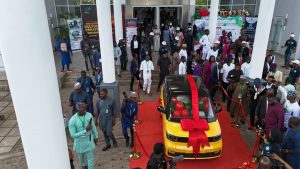
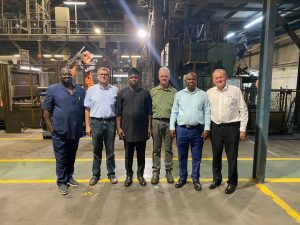
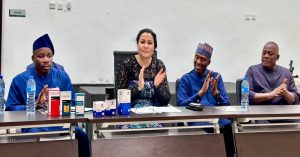
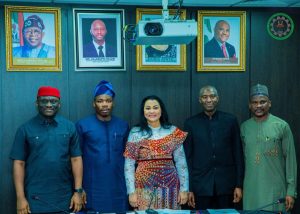
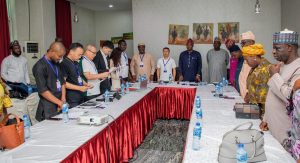
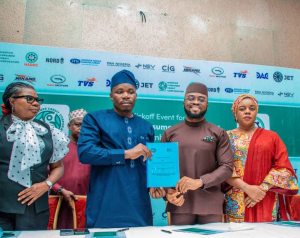
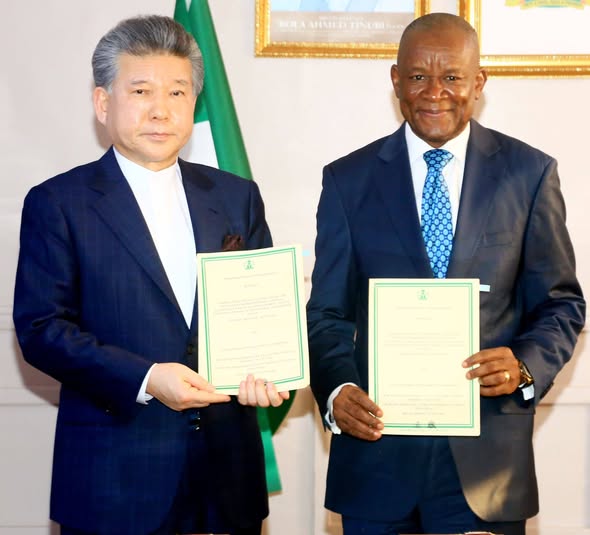
In a strategic move to position Nigeria as one of the leading automotive manufacturing nations in the world, the Federal Government through the office of the Hon. Minister of State for Industry, Federal Ministry of Industry, Trade and Investment (FMITI), on January 30, 2026 at Abuja, signed a memorandum of understanding (MOU) with South Korea’s Asia Economic Development Committee (AEDC) for establishment of an Electric Vehicle (EV) manufacturing plant and the development of charging infrastructures in Nigeria.

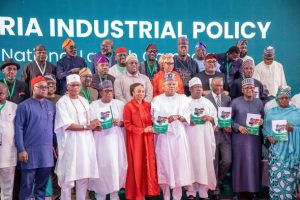
This MoU aligns with the federal government’s National Energy Transition Plan (ETP) and the National Automotive Industry Development Plan(NAIDP), policies of the government both aimed to build an ecosystem for EV infrastructure development, expansion as well as adoption.

The phase I and II of the project will focus on building complete EV Assembly Plant and establishment of facilities capable of full in-house production respectively. With a production capacity of 300,000 vehicles, the plan is also expected to create about10,000 jobs.

The gains of this significant initiative cannot be overemphasized, as the expansion of EV adoption will not only help to reduce the approximately $10 billion spent annually on refined fuel imports, but will also act as a catalyst for nationwide economic growth through the explosive expansion of related industries such as auto parts, charging infrastructure, and vehicle mentainance, thus positioning Nigeria as a leading technology- driven nation in Africa.

Building upon the legacy of AEDC, a non-governmental organisation that operates independently in close cooperation with leading policy makers and international institutions, the AEDC Chairman, Yoon Suk Hun expressed strong commitment “We will devote all of our capabilities to ensuring that Nigeria’s EV industry is built in the most economically viable manner and operated with maximum efficiency, while achieving global competitiveness. Drawing on Korea’s spirit and development experience, our goal is to elevate Nigeria’s automotive industry to world-class standards within 20 to 30 years- an achievement that took advanced economies 150 years and Korea 60 years to accomplish” he stated.

The Minister of State for Industry, FMITI, Senator John Owan Enoh, pledged to work in close coordination with AEDC to ensure the rapid completion of Africa’s first advanced, world- class EV manufacturing plant. He affirmed that the government will extend it’s full cooperation and mobilize all available resources to ensure that the project becomes a key engine of Nigeria’s industrial development.

Emphasizing the significance of the MoU, the Hon Minister said the project aligns strongly with President Tinubu’s push for “Nigeria First Policy” aimed to boost local production and industrial development, stating that the event represents the commitment of the Federal Government in building a diversified economy that is driven by local production.

The NADDC Director General, Otunba Oluwemimo Joseph Osanipin ably represented by the Head of Policy, Planning and Statistics, Mr. Nura Sidi revealed that the collaboration would focus on Technology Transfer, Investment Promotion, Human Capital Development as well as Research and Design.

The Council in line with it’s mandates, had earlier initiated the EV development policy which led to the introduction and adoption of various EV’s, some of which are assembled in the local auto Industry while others are imported into the country.

Through this green energy initiative, Nigeria aims to transform it’s economy into a high value- added manufacturing base powered by green energy. In accordance with the project plan, efforts will be made to develop the broader EV ecosystem, including the establishment of component manufacturing facilities, acquisition of related technologies, development of charging infrastructure, and battery production.
Share:

More Posts

Send Us A Message

ACHIEVEMENTS IN INUSTRIAL AND INFRASTRUCTURE DEPARTMENT

Introduction

The IID focused on advancing Nigeria’s  automotive industry through infrastructure development, skill acquisition, local content promotion, technical support, and policy implementation. Key responsibilities include:
• Developing industrial parks and auto production facilities
• Promoting skills development and job creation
• Supporting vehicle model appraisals
• Coordinating engineering efforts and component parts development
• Managing the informal automotive sector
• Promoting mechanic villages and training institutes

Highlights of 2024 Activities

A. Standards and Guidelines
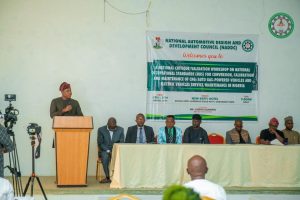
• Validated National Occupational Standards (NOS) for auto gas and electric vehicles in partnership with NBTE.
• Designed guidelines for registration/licensing of CNG conversion workshops nationwide.
• Held national stakeholders’ engagement to finalize CNG workshop registration standards.

B. Infrastructure and Project Oversight
• Oversaw DG NADDC’s visit to Osun, Ondo, and Ekiti States, inspecting multiple NADDC projects and training centers.
• Completed design and began construction of the access road to NADDC Training Centre, Ikorodu.
• Restarted the Auto Service Hub project in Owerri, with land levy waived by the Imo State Government.
• Engaged in efforts to select PPP managers for NADDC Training Centres.

C. Equipment and Capacity Building
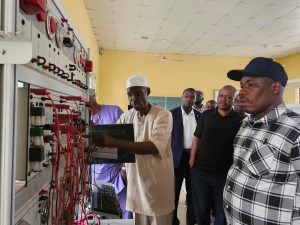
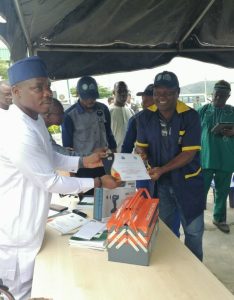
• Received and began installation of training tools at various NADDC centres.
• Partnered with suppliers for staff training on equipment use in Kano, Katsina, Jigawa, and Potiskum.

D. Youth and Technician Engagement
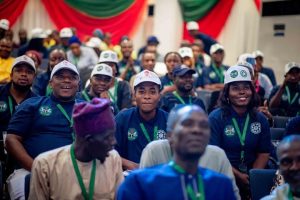
• Hosted a national youth conference on career prospects in the CNG automotive value chain, with over 500 participants and a car design competition.
• Conducted CNG vehicle conversion training in Ekiti State with Lanre Shittu Motors, empowering 45 technicians and converting cars for local institutions.

E. National Programs and Partnerships
• Licensed 70+ CNG conversion workshops across the country.
• Revived efforts on the Nnewi Automotive Industrial Park, with UNIDO reviewing the original Masterplan.
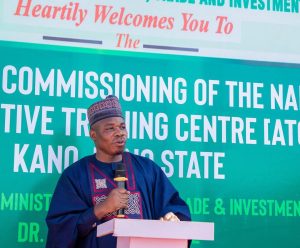
• Coordinated official commissioning of the NADDC Training Centre in Kano.
• Participated in the Anambra State Investment Summit.
• Held internal CNG conversion training for NADDC staff.

Conclusion

Despite funding limitations, the IID made significant progress in infrastructure development, youth empowerment, CNG adoption, and skill-building. Future efforts are poised to strengthen Nigeria’s role in the global automotive sector.

POLICY PLANNING STATISTICS ACHIEVEMENTS

INTRODUCTION

The Policy, Planning & Statistics (PPS) Department of the National Automotive Design and Development Council (NADDC) made notable progress in 2024, advancing the Nigerian automotive industry through strategic policy development, comprehensive planning, and data-driven initiatives.

ACHIEVEMENTS

  1. Growth of Assembly Plants
    New assembly plants registered during the year increased the number of licensed companies to 85. These companies offer a wide range of brands, including partnerships with new Original Equipment Manufacturers (OEMs). Thirty-seven (37) companies maintained production quality standards necessary for yearly license revalidation.   

  2. Revalidation and Processing of Licenses
    The department revalidated 23 licenses for existing local assemblers and processed 14 new applications for bonafide assembly licenses for new entrants into the sector.

  3. Ministerial Deliverables
    PPS submitted inputs to the Federal Ministry of Industry, Trade and Investment for the first to fourth quarters of 2024, aligning its contributions with national targets.

  4. Study Tour to South Africa
    From January 21–27, 2024, PPS organized a study tour to South Africa, targeting key players in the South African automotive industry. The tour aimed to attract investment and catalyze sustainable growth in Nigeria’s automotive sector through collaborative sessions.

  5. Validation of End-of-Life (ELV) Vehicle Recycling Regulation
    In collaboration with the Legal Unit, PPS finalized and secured Federal Ministry of Justice approval for the ELV Recycling Regulation in February 2024, laying the foundation for Nigeria’s vehicle recycling industry.

  6. Stakeholder Dialogue Meeting
    On April 18, 2024, PPS organized a critical dialogue between Local Automotive Component Manufacturers and Assemblers/Manufacturers. The meeting fostered collaboration, encouraged backward integration, and generated stakeholder consensus to strengthen Nigeria’s automotive component manufacturing capabilities.

  7. Inauguration of NAIDP Implementation Committee
    The department facilitated the inauguration of the Nigerian Automotive Industry Development Plan (NAIDP) Implementation Committee on May 23, 2024. The committee is tasked with addressing implementation challenges and ensuring continuous monitoring and evaluation of the NAIDP’s progress.

  8. Engagement with Hejia Industrial Group
    On October 17, 2024, PPS hosted a meeting with Hejia Industrial Group and its subsidiaries, Chengdu Auto Parts Co., Ltd., and Chengdu Chengbao Development Co., Ltd., exploring collaboration opportunities in automotive parts manufacturing and vehicle inspection services.

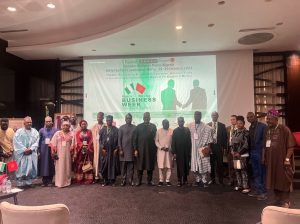
  9. Participation at Nigeria-Morocco Business Week
    From October 29 to November 1, 2024, PPS facilitated the participation of the NADDC Director-General and delegation at the Nigeria-Morocco Business Week. The delegation engaged in keynote speeches, panel discussions, B2B meetings, and factory visits, strengthening industrial ties between both nations.

  10. Oversight Visit by House Committee on Industry
    From November 12–15, 2024, PPS coordinated an oversight visit by the House Committee on Industry to vehicle assembly plants in Lagos, showcasing the progress in the sector.

  11. Collaboration Meeting with Nigerian Consumer Credit Corporation (CREDICORP)
    On December 5, 2024, PPS convened a meeting with CREDICORP to explore partnerships aimed at making vehicle financing accessible and affordable for Nigerian consumers.

  12. Oversight Visit by Senate Committee on Industry
    From December 8–12, 2024, PPS facilitated another oversight visit, this time by the Senate Committee on Industry, further strengthening government support for local assembly plants.

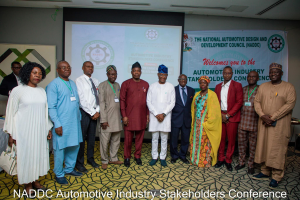
  13. Automotive Industry Stakeholders Conference
    On December 16, 2024, PPS organized a major conference gathering industry players to critically review challenges hindering NAIDP 2023–2033 implementation and jointly propose actionable strategies to overcome these obstacles.

  14. Annual National Automotive Industry Statistics
    In December 2024, PPS conducted its annual data collection exercise. The initiative assessed the current state of automotive workshops, skilled mechanics, and auto-component manufacturers, providing insights into sectoral quality and performance.

CONCLUSION

In 2024, the PPS Department demonstrated a strong commitment to advancing Nigeria’s automotive industry through strategic planning, effective policy implementation, stakeholder engagement, and data-driven action. Their efforts have significantly advanced the National Automotive Industry Development Plan (NAIDP) 2023–2033, laying a solid foundation for future sector growth and sustainable development.